BPC-157 and Tissue Repair: What the Research Shows
An overview of the preclinical evidence on BPC-157, a synthetic peptide studied for its role in tendon, muscle and mucosal healing.
For research use only
The products and information on this page are intended exclusively for in vitro laboratory research and educational purposes. Not suitable for human consumption, diagnosis or therapeutic use. Studies cited are from third-party scientific literature and do not constitute medical advice.
Research material
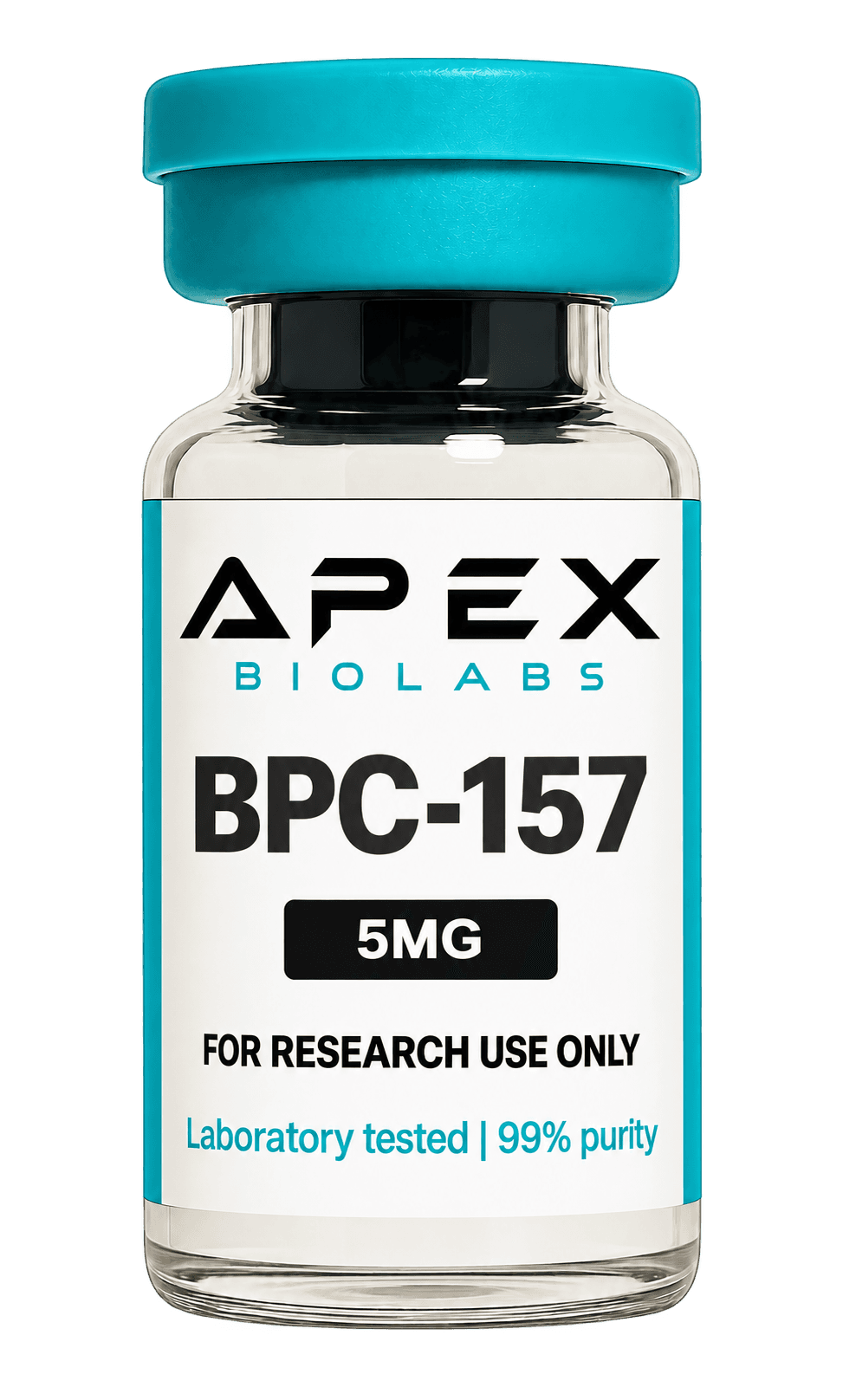
View BPC-157
€34.98
What is BPC-157?
BPC-157 (Body Protective Compound 157) is a synthetic pentadecapeptide consisting of 15 amino acids. It was derived from a naturally occurring protein found in human gastric juice. Unlike many peptides studied in isolation, BPC-157 has been the subject of a substantial body of preclinical research — primarily in rodent models — examining its potential role in tissue repair, wound healing and cytoprotection.
It is supplied as a lyophilised powder for research use and is not approved by any regulatory authority for clinical or veterinary application.
Proposed Mechanism
The mechanisms most frequently reported in preclinical literature include:
- VEGF upregulation — BPC-157 appears to stimulate vascular endothelial growth factor expression, promoting the formation of new blood vessels (angiogenesis) in injured tissue.
- Nitric oxide pathway modulation — Several studies point to interaction with the NO system, which plays a role in vascular tone and tissue perfusion.
- Tendon-to-bone healing — Rodent studies have documented accelerated outgrowth of tendon fibroblasts and improved collagen organisation at repair sites.
- Gut mucosal protection — Originally identified in gastric juice, BPC-157 has been investigated in models of colitis, fistula and inflammatory bowel conditions.
What the Studies Show
The majority of published data comes from the research group of Dr. Predrag Sikiric at the University of Zagreb. Key findings across rodent models include:
- Accelerated healing of Achilles tendon transection compared to controls
- Reduced inflammation and improved tissue architecture in colitis models
- Protective effects on skeletal muscle after crush injury
- Potential neuroprotective activity in spinal cord injury models
A 2021 review in Current Pharmaceutical Design summarised the available data and noted consistent pro-healing effects across multiple tissue types, while emphasising that all data to date is preclinical.
Limitations
Several important caveats apply to interpreting this research:
- No human clinical trials have been completed. The evidence base is almost entirely from animal models, primarily rats.
- Single research group dominance. A large proportion of studies originate from one institution, limiting independent replication.
- Mechanism not fully characterised. No single receptor has been definitively identified as the primary target.
- Formulation variability. Studies use different routes of administration (oral, subcutaneous, intraperitoneal), making direct comparison difficult.
References
- Sikiric P, et al. Stable Gastric Pentadecapeptide BPC 157: Novel Therapy in Gastrointestinal Tract. Curr Pharm Des. 2011.
- Chang CH, et al. The promoting effect of pentadecapeptide BPC 157 on tendon healing involves tendon outgrowth, cell survival, and cell migration. J Appl Physiol. 2011.
- Gwyer D, et al. Gastric pentadecapeptide body protection compound BPC 157 and its role in accelerating musculoskeletal soft tissue healing. Cell Tissue Res. 2019.
- Sikiric P, et al. Brain-gut Axis and Pentadecapeptide BPC 157: Theoretical and Practical Implications. Curr Neuropharmacol. 2016.